

You’ve got the keywords. You’ve published the content. Maybe even launched a few ads. But conversions still lag. What’s likely missing? A clear view of the marketing funnel.
It’s not just about traffic. It’s about guiding people from discovery to loyalty. In this post, we’ll cover the Awareness and Consideration stages.
Later in Part 2 will explore Conversion and Loyalty, where action and long-term relationships begin.
What is a Marketing Funnel?
The customer journey works like a funnel. Some drop off, others move closer to buying. And no funnels aren’t one-size-fits-all. Some have 3 stages, others 6. It depends on your goals.
For this guide, we’re using a simple 4-stage marketing funnel model:
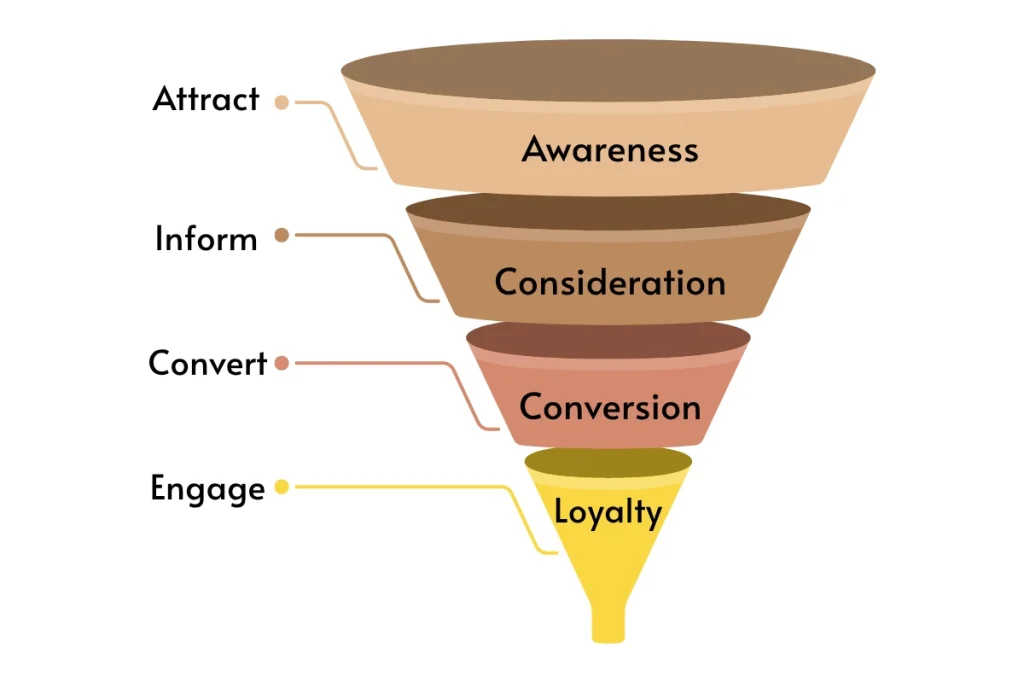
This structure gives us a clear way to think about how people move from discovery to decision. It also helps us create the right content and marketing strategy for each step.
Note
The marketing funnel is also called the purchase funnel, buyer funnel, customer funnel, conversion funnel, or sales funnel.
Why the Marketing Funnel Matters
A campaign brings in traffic. A blog post sparks interest. But here’s the real question:
Will they actually take the next step?
The marketing funnel shows the big picture. How people go from discovering your brand to becoming loyal supporters. Once you get that flow, your strategy becomes sharper and effective.
A marketing funnel clarifies:
- What to say at each stage
- When to educate, inspire, or ask for action
- How to build trust instead of chasing one-time clicks
For anyone learning SEO, this mindset is a game changer. It helps you create content that connects, boosts engagement, and supports stronger search performance.
Stage 1: Awareness

This is when someone first discovers your brand. Maybe they’re searching for “best ergonomic desk chair,” or just scrolling Instagram when your ad catches their eye.
Either way, your job here is to get noticed.
What Works in the Awareness Stage
| Strategy | How It Works |
|---|---|
| SEO | Help people find you on Google by writing optimized blog posts like “best desk organizers for small spaces.” |
| SEM (Search Ads) | Show your product at the top of search results with Google Ads for terms like “minimalist desk accessories.” |
| Social Media Marketing | Build interest by posting organic content, like workspace inspiration featuring your product. |
| Social Media Ads | Reach new audiences with targeted Instagram ads for design-savvy remote workers. |
| Display Ads | Promote visually with lifestyle banners on blogs or news sites your audience reads. |
| Influencer Marketing | Partner with creators your audience trusts to showcase your product in use. |
| Content Marketing | Attract interest by sharing valuable content, like a guide on setting up a productive home office. |
Example: How Forma Studio Gets Discovered
Meet Forma Studio, a small brand that designs minimalist workspace tools for freelancers and remote workers. Forma Studio wants to reach more people who care about clean design and productivity. To raise awareness, they:
- Launch search ads for terms like “best desk organizers for small spaces”.
- Post productivity hacks on Instagram and Threads, featuring their own products in natural ways.
- Create blog posts optimized for search, such as “How to Design a Productive Workspace at Home”.
- Partner with a design-focused content creator who features Forma products in their home office setup.
They don’t try to be everywhere. Instead, they choose a few channels where their ideal customer is already hanging out.
Stage 2: Consideration

Now they know you exist, but are you the right fit? This is when they compare, review, and dig deeper. The Consideration stage is about building trust, answering questions, and showing what makes you different.
What Works in the Consideration Stage
| Strategy | How It Works |
|---|---|
| Remarketing Ads | Reconnect with visitors by showing ads for products they viewed. |
| Email Marketing | Stay in touch by sending quick tips, product updates, and offers. |
| Testimonials | Build trust with real user quotes or short video clips. |
| Unique Selling Proposition (USP) | Highlight what makes you different by repeating your USP across product pages. |
| Case Studies | Show real-world results by writing about how someone used your product. |
| Webinars or Q&As | Teach and build authority through live sessions that answer top questions. |
Example: How Forma Studio Builds Trust
Forma’s blog posts and ads are bringing in curious visitors. Now, they focus on helping people feel confident in the brand.
Here’s how they do it:
- After someone visits their website or social media page, Forma Studio remarkets ads for the specific product page they visited.
- A welcome email tells the story behind Forma Studio, along with a discount code for first-time buyers.
- To increase interest among potential customers, Forma Studio includes positive testimonials on product pages, on their social media, and periodically in emails.
- Their USP “Workspace tools designed with calm, clarity, and focus in mind” is repeated throughout the site and social bios.
This builds a narrative around the brand. It gives potential customers a reason to trust Forma and feel good about moving closer to a purchase.
Most people aren’t ready to buy on day one. Your role is to show up with value. Informed, confident visitors are more likely to take the next step.
Want to learn how to encourage people to buy and build long-term trust after the purchase? That’s what we’ll cover in Part 2.
In the meantime, explore more practical tips in our learn SEO section or leave a comment to share your thoughts or questions.
Source:
Based on insights from the Digital Marketing & E-commerce course by Google.
Leave a Reply to Marketing Funnel Stages: Convert & Retain Better Cancel reply